
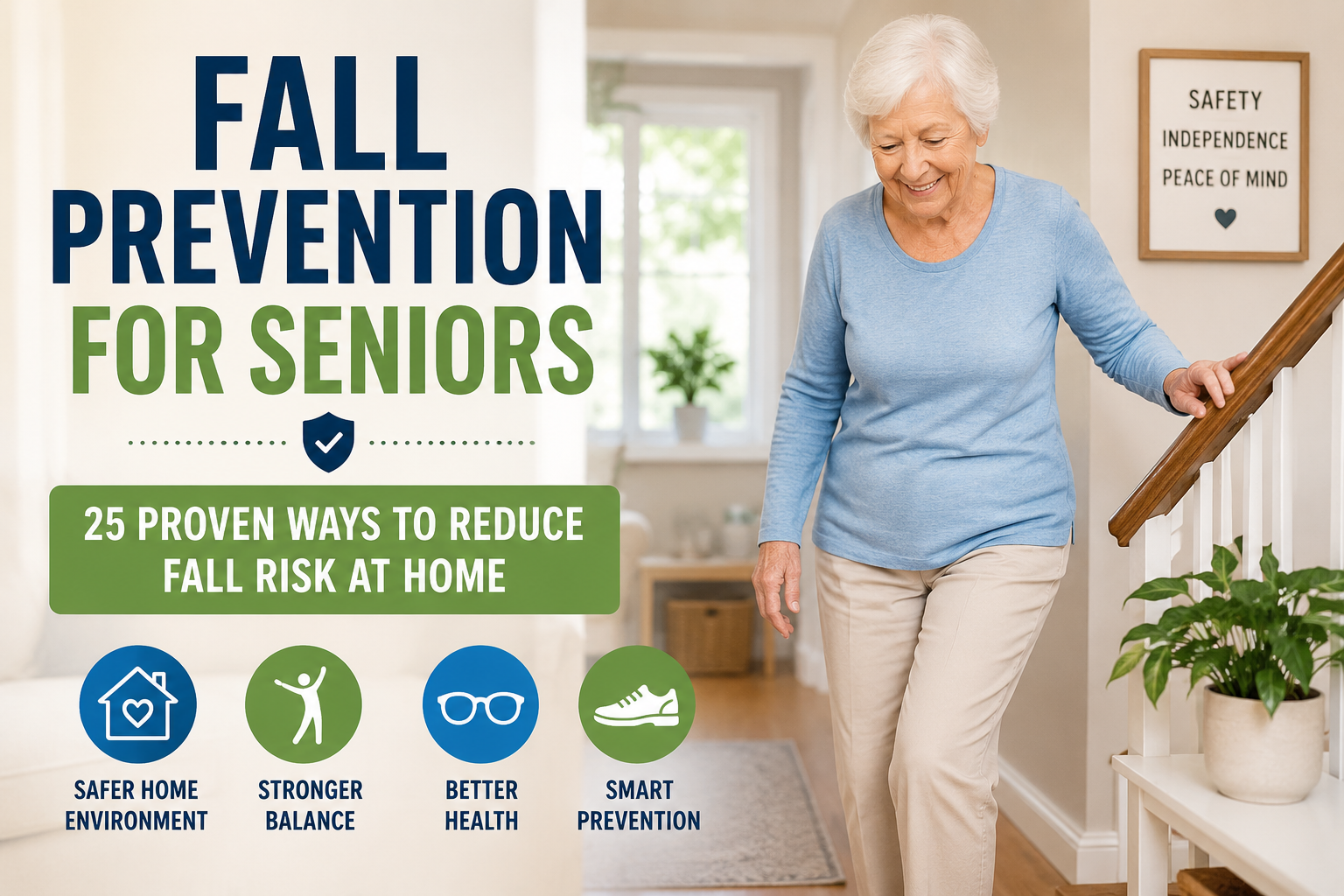

Fall Prevention for Seniors: 25 Proven Ways to Reduce Fall Risk at Home
Falls are one of the leading causes of injury among older adults. A single fall can result in broken bones, hospitalization, loss of independence, and a decline in overall health.
The good news is that many falls can be prevented. Small changes to the home environment, regular physical activity, medication reviews, and awareness of risk factors can significantly reduce the likelihood of falling.
Whether you're an older adult looking to stay independent or a caregiver supporting a loved one, understanding fall prevention is one of the most important steps you can take to protect long-term health and quality of life.
Table of Contents
- Why Fall Prevention Matters
- Common Causes of Falls in Older Adults
- Who Is Most at Risk?
- 25 Fall Prevention Tips
- Fall-Proofing Your Home
- Exercises That Improve Balance and Strength
- Medications That May Increase Fall Risk
- Warning Signs That Should Not Be Ignored
- What To Do After a Fall
- Frequently Asked Questions
- Conclusion
Why Fall Prevention Matters
Falls are not a normal part of aging, but aging can increase the risk.
As we get older, changes in balance, muscle strength, vision, hearing, and reaction time can make it easier to lose footing. Chronic health conditions and certain medications can increase risk even further.
The consequences of a fall can include:
- Hip fractures
- Head injuries
- Loss of mobility
- Fear of falling again
- Reduced independence
- Long-term disability
Preventing falls helps older adults remain active, confident, and independent for longer.
Common Causes of Falls in Older Adults
Many falls happen because of a combination of factors rather than a single cause.
Physical Factors
- Muscle weakness
- Poor balance
- Joint stiffness
- Foot pain
- Vision problems
- Hearing loss
Medical Factors
- Low blood pressure
- Diabetes
- Parkinson's disease
- Stroke history
- Dementia
- Arthritis
Environmental Factors
- Loose rugs
- Cluttered walkways
- Poor lighting
- Slippery floors
- Uneven steps
- Lack of handrails
Who Is Most at Risk?
Older adults may have a higher risk of falling if they:
- Are over age 65
- Have fallen before
- Take multiple medications
- Use mobility devices
- Have vision problems
- Experience dizziness
- Have muscle weakness
- Live alone
- Have chronic medical conditions
A previous fall is one of the strongest predictors of future falls.
25 Fall Prevention Tips
1. Remove Clutter From Walkways
Keep pathways clear of cords, boxes, shoes, and other obstacles.
2. Improve Home Lighting
Install brighter bulbs and nightlights in hallways, bedrooms, and bathrooms.
3. Secure Loose Rugs
Use non-slip backing or remove rugs entirely.
4. Install Grab Bars
Place grab bars near toilets and inside showers.
5. Add Handrails on Both Sides of Stairs
Sturdy handrails improve stability and confidence.
6. Wear Proper Footwear
Choose supportive, non-slip shoes instead of slippers or socks alone.
7. Review Medications Regularly
Ask your healthcare provider whether medications could contribute to dizziness or balance issues.
8. Stay Physically Active
Regular movement helps maintain strength and coordination.
9. Practice Balance Exercises
Balance training reduces fall risk significantly.
10. Strengthen Leg Muscles
Strong legs help stabilize the body during movement.
11. Get Annual Vision Exams
Updated prescriptions can improve safety and mobility.
12. Have Hearing Checked
Hearing contributes more to balance than many people realize.
13. Rise Slowly From Sitting
Sudden position changes can cause dizziness.
14. Stay Hydrated
Dehydration can contribute to weakness and low blood pressure.
15. Use Assistive Devices Correctly
Canes and walkers should be properly fitted.
16. Keep Frequently Used Items Within Reach
Avoid climbing or stretching excessively.
17. Use Non-Slip Mats
Place them in bathrooms and kitchens.
18. Improve Bathroom Safety
Install shower chairs and handheld showerheads.
19. Manage Chronic Conditions
Proper disease management supports stability and mobility.
20. Maintain Healthy Blood Pressure
Monitor changes that may affect balance.
21. Address Foot Problems
Painful feet can alter gait and increase fall risk.
22. Exercise Daily
Consistency matters more than intensity.
23. Avoid Walking in Poor Weather Conditions
Use caution during rain, snow, or icy conditions.
24. Carry a Phone or Alert Device
Quick access to help can reduce complications after a fall.
25. Create a Fall Prevention Plan
Work with caregivers and healthcare providers to identify individual risks.
Fall-Proofing Your Home
Living Room
- Remove clutter
- Secure electrical cords
- Improve lighting
- Eliminate unstable furniture
Kitchen
- Store commonly used items at waist height
- Clean spills immediately
- Use non-slip flooring
Bathroom
- Install grab bars
- Use raised toilet seats if needed
- Add non-slip shower mats
Bedroom
- Place a lamp near the bed
- Keep pathways clear
- Use nightlights
Stairs
- Repair loose steps
- Add handrails
- Improve visibility with contrasting tape
Exercises That Improve Balance and Strength
Always consult a healthcare provider before beginning a new exercise routine.
Walking
Improves endurance and mobility.
Chair Stands
Strengthens leg muscles needed for standing and walking.
Heel Raises
Builds ankle strength and stability.
Tai Chi
Research consistently shows Tai Chi can improve balance and reduce falls.
Single-Leg Balance Exercises
Enhances coordination and stability when performed safely.
Medications That May Increase Fall Risk
Some medications can affect alertness, balance, or blood pressure.
Examples include:
- Sleeping medications
- Anti-anxiety medications
- Certain antidepressants
- Blood pressure medications
- Pain medications
Never stop medications without medical guidance.
Caregivers should encourage regular medication reviews with healthcare providers.
Warning Signs That Should Not Be Ignored
Seek medical evaluation if an older adult experiences:
- Frequent dizziness
- Unsteady walking
- Multiple near-falls
- New weakness
- Sudden confusion
- Vision changes
- Repeated falls
These symptoms may indicate underlying medical issues that require treatment.
What To Do After a Fall
If a fall occurs:
- Stay calm.
- Check for injuries.
- Call for help if needed.
- Avoid standing immediately if pain is present.
- Seek medical evaluation for head injuries, severe pain, or inability to bear weight.
- Investigate the cause to prevent future falls.
Caregivers should document what happened and discuss the incident with healthcare providers.
Frequently Asked Questions
What is the most effective fall prevention strategy?
A combination of strength training, balance exercises, medication review, vision care, and home safety modifications provides the best protection.
Why are falls so dangerous for seniors?
Falls can lead to fractures, head injuries, hospitalization, and loss of independence.
How often should seniors perform balance exercises?
Most experts recommend balance-focused activities at least two to three times per week.
Does walking help prevent falls?
Yes. Walking improves endurance, muscle strength, and mobility, all of which contribute to better stability.
Can medications increase fall risk?
Yes. Many medications can cause dizziness, drowsiness, or changes in blood pressure that increase the risk of falling.
Call to Action
Looking for more caregiver-friendly safety tips? Explore our senior care resources and join the Caregiver Compass community for practical guidance on aging in place, home safety, and healthy aging.
Fall Prevention Essentials for Seniors
Creating a safer home often starts with a few simple tools. These products can help reduce fall risks and support independent living.
1. Non-Slip Bathroom Mats
Bathrooms are one of the most common locations for falls. Non-slip mats can provide better traction around sinks, showers, and tubs.
2. Grab Bars and Safety Rails
Properly installed grab bars offer additional support when getting in and out of the shower or using the toilet.
3. Motion-Sensor Night Lights
Improved nighttime visibility can help reduce trips and falls when moving through hallways and bathrooms.
4. Medical Alert Systems
Emergency alert devices can provide peace of mind for seniors who live alone and allow quick access to assistance after a fall.
5. Fall Prevention Checklists and Caregiver Resources
Having a room-by-room safety checklist can help caregivers identify hidden hazards and create a safer living environment.
Helpful Resource: Browse our printable caregiver tools and senior safety resources in our Etsy shop.
Shop Fall Prevention Resources on Etsy
Additional Resources for Caregivers
You may also find these caregiver guides helpful:
- RN Approved Fall Prevention
- Senior Wellness Kit
- 5 Must-Have Dementia Care Products Every Caregiver Should Own
Trusted Fall Prevention Resources
- CDC STEADI Fall Prevention Program
- National Institute on Aging: Falls and Fractures
- National Council on Aging Fall Prevention Resources
Conclusion
Fall prevention is one of the most effective ways to protect the health, independence, and quality of life of older adults. While no strategy can eliminate all risk, combining home safety improvements, regular exercise, medical management, and caregiver support can dramatically reduce the likelihood of a serious fall.
The best time to prevent a fall is before one happens. Small changes made today can help older adults stay safe, active, and confident for years to come.
For more helpful information related to Senior Well-Being and helpful products CLICK HERE