
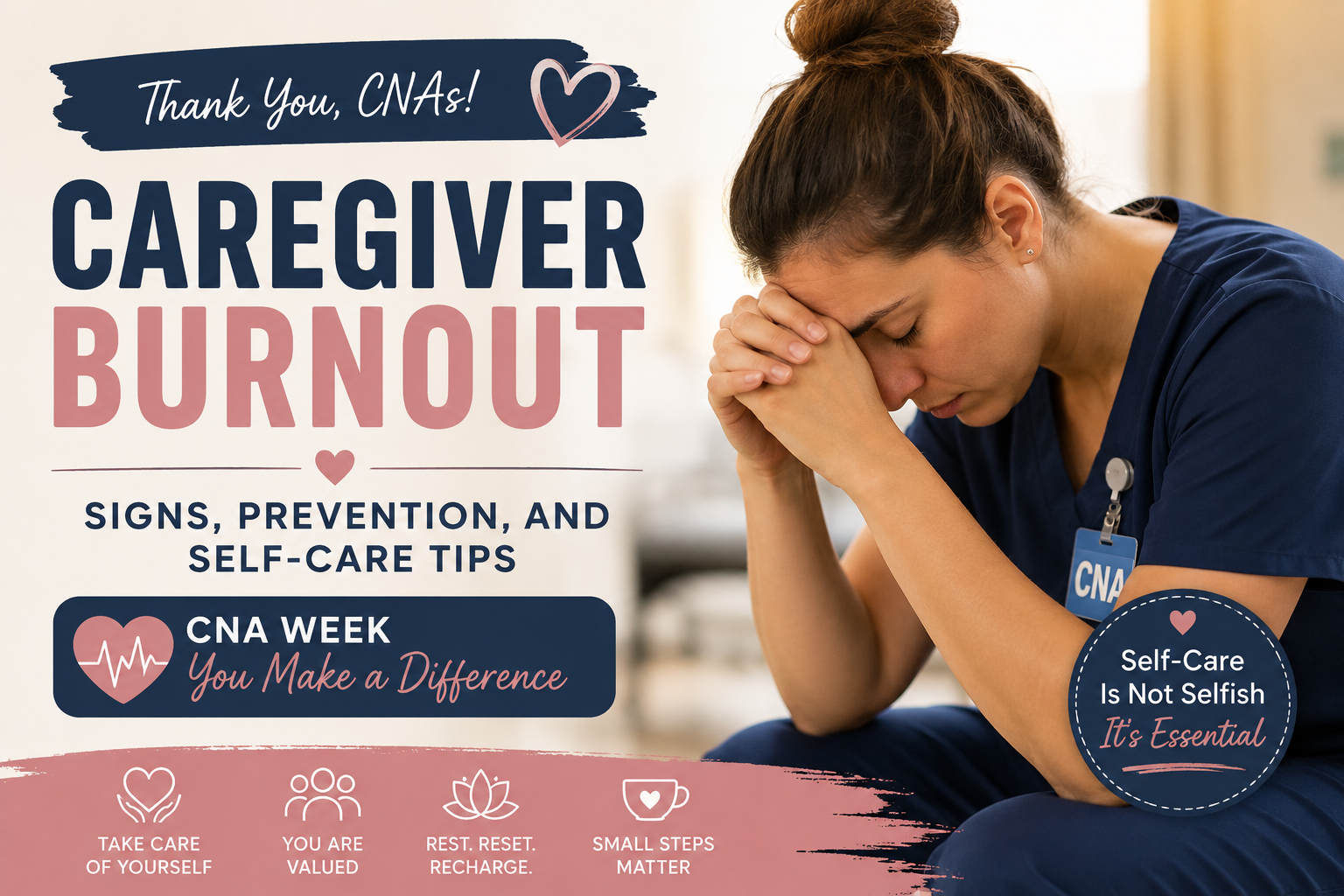

CNA Week and Caregiver Burnout: How to Reclaim Your Energy, Protect Your Health, and Continue Making a Difference
CNA Week is a time to recognize the extraordinary work Certified Nursing Assistants do every day. Whether you are a CNA, professional caregiver, or family caregiver, your work matters.
You help people maintain dignity.
You provide comfort during difficult moments.
You often become the steady presence that families depend on.
Yet many caregivers carry a heavy burden that often goes unseen: caregiver burnout.
If you've been feeling exhausted, emotionally drained, overwhelmed, or disconnected from the work you once loved, you are not alone. Burnout is common among caregivers because caring for others requires tremendous physical, emotional, and mental energy.
The good news is that burnout doesn't have to define your caregiving journey.
This CNA Week, let's focus on something equally important as caring for others: caring for yourself.
Table of Contents
- What Is Caregiver Burnout?
- Why CNAs and Caregivers Are at Higher Risk
- Signs of Caregiver Burnout
- The Hidden Cost of Burnout
- 10 Encouraging Ways to Prevent and Manage Burnout
- CNA Week: A Time to Celebrate Yourself
- Resources for Caregivers
- Frequently Asked Questions
- Final Thoughts
What Is Caregiver Burnout?
Caregiver burnout is a state of physical, emotional, and mental exhaustion that develops when caregiving demands consistently exceed available energy and support.
Burnout doesn't happen overnight.
It often develops gradually through:
- Long shifts
- Staffing shortages
- Emotional stress
- Lack of sleep
- Family responsibilities
- Limited personal time
- Feeling underappreciated
Many caregivers are so focused on helping others that they don't recognize burnout until they're already struggling.
Caregiver burnout is a state of emotional, physical, and mental exhaustion caused by the ongoing demands of caring for others without adequate rest, support, or self-care.
Why CNAs and Caregivers Are at Higher Risk
Certified Nursing Assistants are often the frontline heroes of healthcare.
You assist with:
- Activities of daily living
- Personal hygiene
- Mobility support
- Feeding assistance
- Emotional companionship
- End-of-life comfort care
These responsibilities are meaningful, but they can also be emotionally demanding.
Many caregivers experience:
Compassion Fatigue
Compassion fatigue occurs when constant exposure to others' suffering begins to affect your emotional well-being.
Emotional Overload
Caregivers frequently absorb stress from patients, residents, and family members.
Physical Exhaustion
Lifting, transferring, walking, and assisting patients can place significant demands on the body.
Guilt
Many caregivers feel guilty when taking time for themselves, even though self-care is necessary for sustainable caregiving.
Signs of Caregiver Burnout
Recognizing burnout early can help prevent more serious emotional and physical health challenges.
Physical Symptoms
- Constant fatigue
- Frequent headaches
- Muscle tension
- Sleep problems
- Increased illness
- Changes in appetite
Emotional Symptoms
- Irritability
- Anxiety
- Sadness
- Feeling hopeless
- Increased frustration
- Emotional numbness
Behavioral Symptoms
- Withdrawal from friends and family
- Loss of motivation
- Reduced job satisfaction
- Difficulty concentrating
- Increased absenteeism
If several of these signs sound familiar, it may be time to prioritize your own well-being.
The Hidden Cost of Burnout
Burnout impacts more than the caregiver.
It can affect:
- Patient care quality
- Family relationships
- Mental health
- Physical health
- Career satisfaction
- Long-term happiness
The reality is simple:
You cannot continuously pour from an empty cup.
The best caregivers understand that taking care of themselves is not selfish—it is part of providing excellent care.
10 Encouraging Ways to Prevent and Manage Burnout
1. Give Yourself Permission to Rest
Rest is productive.
Your body and mind need recovery time to continue showing up for others.
Even small breaks can make a difference:
- Five minutes of deep breathing
- A short walk
- Reading a chapter of a book
- Sitting quietly with a cup of coffee
Small moments of restoration add up.
2. Focus on What You Can Control
Caregiving often involves situations outside your control.
Instead of carrying every burden, focus on:
- Your effort
- Your attitude
- Your boundaries
- Your self-care habits
Release responsibility for outcomes that are beyond your influence.
3. Create Healthy Boundaries
Boundaries protect your energy.
Examples include:
- Saying no to extra shifts when exhausted
- Protecting scheduled days off
- Limiting work-related communication during personal time
- Asking for help when needed
Strong boundaries help prevent resentment and emotional exhaustion.
4. Build a Support System
No caregiver should feel alone.
Consider connecting with:
- Fellow CNAs
- Caregiver support groups
- Trusted friends
- Family members
- Faith communities
Sharing experiences with others who understand can be incredibly healing.
5. Celebrate Small Wins
Caregiving rarely comes with immediate rewards.
Take time to recognize:
- A patient smile
- A comforting conversation
- A successful transfer
- A family member's gratitude
These moments matter.
They are evidence of the difference you make every day.
6. Prioritize Sleep
Sleep is one of the most effective tools for preventing burnout.
Try to:
- Maintain a consistent bedtime
- Limit screen use before sleep
- Create a relaxing bedtime routine
- Keep your sleeping environment cool and dark
Even modest improvements in sleep quality can improve mood and resilience.
7. Nourish Your Body
Busy caregivers often neglect their own nutrition.
Aim for:
- Adequate hydration
- Protein-rich meals
- Fruits and vegetables
- Healthy snacks during shifts
Fueling your body helps support both physical and emotional health.
8. Practice Self-Compassion
Many caregivers hold themselves to impossible standards.
Remember:
You do not have to be perfect.
You simply need to do your best with the resources available to you.
Treat yourself with the same kindness you offer others.
9. Reconnect With Your Purpose
Think back to why you became a caregiver.
Perhaps it was:
- A desire to help others
- A passion for healthcare
- A personal caregiving experience
- A commitment to service
Your purpose still matters—even on difficult days.
10. Accept Help When It's Offered
Many caregivers are excellent at giving help but struggle to receive it.
This CNA Week, challenge yourself to accept support when available.
Support is not weakness.
Support is sustainability.
CNA Week: A Time to Celebrate Yourself
During CNA Week, healthcare organizations recognize the incredible impact CNAs have on patients and families.
But recognition shouldn't only come from others.
Take a moment to acknowledge your own achievements.
Think about:
- Lives you've touched
- Comfort you've provided
- Families you've supported
- Challenges you've overcome
You may not always hear it, but your work matters.
Every shift matters.
Every act of kindness matters.
Every patient interaction matters.
Healthcare would not function without caregivers like you.
Resources for Caregivers
Caregivers don't have to navigate burnout alone. This trusted organizations offer educational resources, support, and guidance:
This resources provide practical information on caregiving, stress management, senior care planning, and caregiver support.
Caregiver Tip From an RN Perspective
One of the most effective burnout prevention strategies is creating a daily "reset ritual."
This can be as simple as:
- Taking three deep breaths before entering your home
- Listening to calming music after work
- Writing down one positive thing that happened during your shift
These small habits help separate work stress from personal life and support emotional recovery.
Frequently Asked Questions
What is the difference between caregiver stress and caregiver burnout?
Caregiver stress is a normal response to caregiving demands. Burnout occurs when stress becomes chronic and leads to emotional, mental, and physical exhaustion.
How common is caregiver burnout?
Burnout is extremely common among healthcare professionals and family caregivers, especially those providing long-term care.
Can burnout affect patient care?
Yes. Burnout can reduce concentration, increase fatigue, and impact overall job satisfaction, making self-care essential for both caregivers and care recipients.
What should I do if I think I'm experiencing burnout?
Talk with a supervisor, healthcare provider, counselor, or trusted support person. Seeking help early can prevent burnout from becoming more severe.
Why is CNA Week important?
CNA Week recognizes the dedication, compassion, and contributions of Certified Nursing Assistants who provide essential care and support to patients every day.
Conclusion
This CNA Week, remember that caring for yourself is not separate from caring for others.
It is part of it.
You deserve rest.
You deserve support.
You deserve appreciation.
Most importantly, you deserve the same compassion you extend to every patient, resident, and family member you serve.
The caregiving journey can be challenging, but it is also deeply meaningful. By prioritizing your well-being, setting healthy boundaries, and seeking support when needed, you can continue making a positive difference while protecting your own health and happiness.
Call to Action
To all CNAs and caregivers: Thank you for the work you do every day.
If this article encouraged you, share it with another caregiver who may need a reminder that they are valued, appreciated, and never alone.
Fun Gift Ideas for that Special CNA
Helpful Resources: