
Caregiver Crisis? Here's What to Do When You Don't Know What to Do
Being a caregiver often means making difficult decisions in moments of stress, exhaustion, and uncertainty.
One minute everything seems manageable.
The next, your loved one refuses medication, becomes angry, insists on going home, stops eating, or wanders out the front door.
If you've ever found yourself thinking:
-
"What am I supposed to do right now?"
-
"Why is this happening?"
-
"Am I handling this correctly?"
-
"Why didn't anyone prepare me for this?"
You are not alone.
The truth is that most caregivers are never taught how to respond to the situations they face every day.
The Problem Most Caregivers Face
When a caregiving crisis happens, emotions often take over before solutions can begin.
You may feel:
-
Frustrated
-
Afraid
-
Overwhelmed
-
Exhausted
-
Guilty
-
Unprepared
In these moments, it's easy to react instead of respond.
Unfortunately, reacting often makes the situation worse.
That's why having a simple crisis-response system can make all the difference.
Why Difficult Behaviors Happen
Many caregiving challenges are not actually about the behavior you see.
They are often about an unmet need.
For example:
A loved one refusing a bath may be afraid of falling.
Someone refusing medication may be confused or anxious.
A person with dementia who repeatedly asks the same question may be seeking reassurance rather than information.
Even aggression is often rooted in fear, pain, confusion, or frustration.
When we focus only on the behavior, we miss the opportunity to solve the real problem.
The CARE Method
One of the simplest ways to respond during a caregiving crisis is to remember four steps:
C — Calm Yourself
Before speaking or taking action:
-
Take a deep breath
-
Lower your voice
-
Slow your movements
Your emotional state often influences theirs.
A — Assess the Situation
Ask yourself:
-
Are they in pain?
-
Are they hungry?
-
Are they tired?
-
Are they confused?
-
Has something changed in their routine?
Many caregiving challenges have a physical or emotional cause.
R — Reassure First
People rarely calm down when they feel corrected.
They often calm down when they feel understood.
Simple phrases like:
-
"I'm here with you."
-
"You're safe."
-
"Let's figure this out together."
can reduce anxiety and resistance.
E — Engage With a Solution
Choose one small action:
-
Offer water
-
Change the environment
-
Play calming music
-
Redirect attention
-
Take a short walk
Small actions often create big improvements.
The Most Common Caregiver Crises
Over the years, certain situations appear again and again.
When They Refuse Help
Refusal is often about preserving dignity and independence.
Offering choices instead of demands can dramatically improve cooperation.
When They Refuse Medication
Medication refusal is often rooted in fear, confusion, or a desire for control.
Simple explanations and calm communication usually work better than arguments.
When They Refuse Bathing
Many older adults feel vulnerable, embarrassed, or fearful during bathing.
Creating comfort and privacy is often more effective than insisting.
When They Keep Asking the Same Question
Repetitive questions are often caused by memory loss, anxiety, or a need for reassurance.
Respond to the emotion behind the question rather than the question itself.
When They Want to Go Home
For many people living with dementia, "home" is a feeling rather than a place.
Validation often works better than correction.
When They Become Angry or Aggressive
Aggression is often communication in disguise.
Pain, fear, confusion, and overstimulation are common triggers.
When They Start Wandering
Wandering is usually a sign that the person is trying to solve a problem that feels very real to them.
Understanding the trigger is the first step toward prevention.
What Caregivers Need Most
Most caregivers don't need more generic advice.
They need practical guidance they can use in the moment.
They need:
-
Scripts for difficult conversations
-
Step-by-step action plans
-
Emergency checklists
-
Crisis response tools
-
Real-world solutions
Because when emotions are high, complicated information isn't helpful.
Simple, actionable guidance is.
A Resource Created Specifically for Caregiver Crises
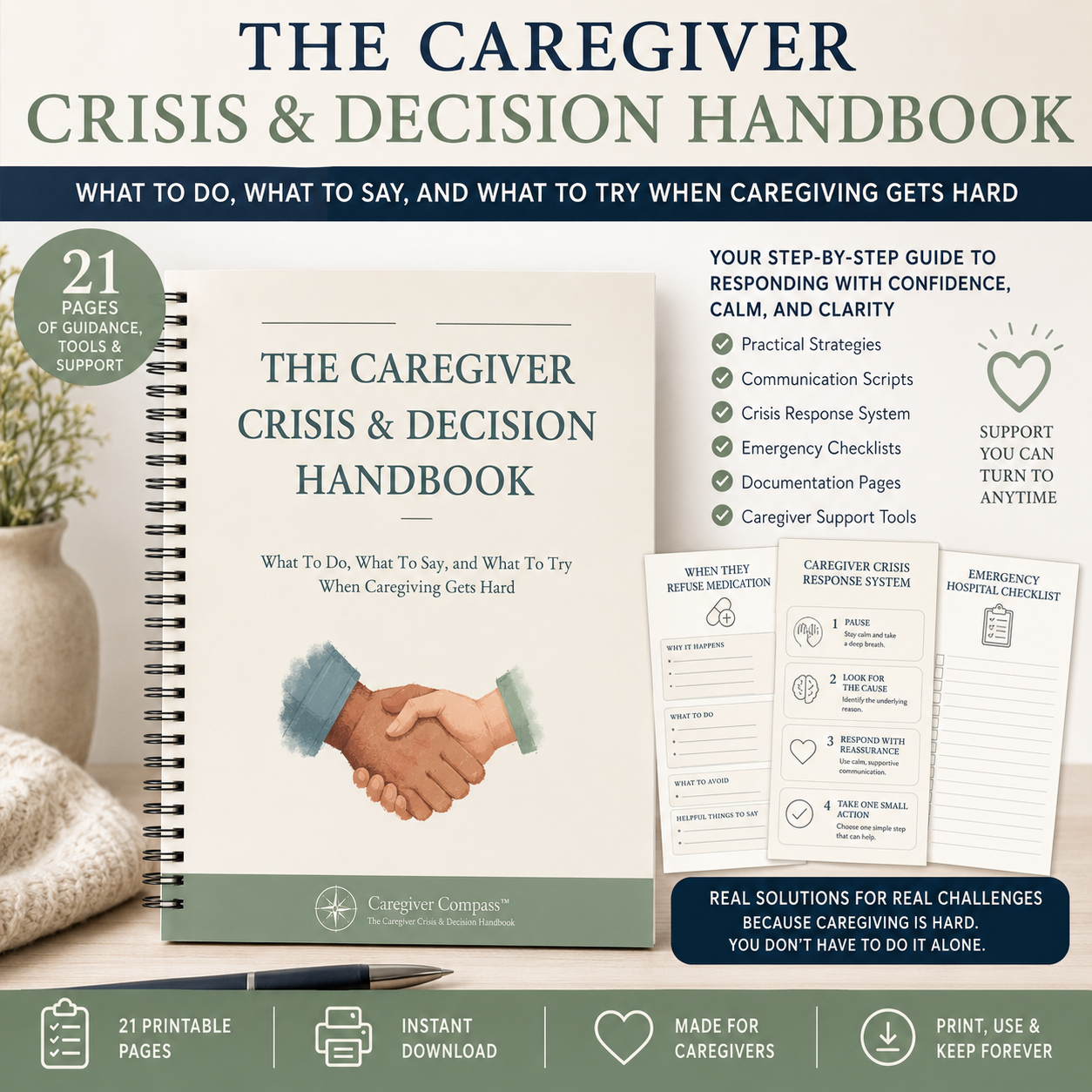
That's exactly why I created The Caregiver Crisis & Decision Handbook.
This printable workbook was designed to help caregivers navigate difficult situations with greater confidence and less stress.
Inside you'll find:
-
Crisis response frameworks
-
Communication scripts
-
Medication refusal strategies
-
Bathing resistance solutions
-
Wandering prevention plans
-
Aggression response tools
-
Hospital emergency checklists
-
Caregiver burnout support
-
Emergency action planning worksheets
It's the guide I wish every caregiver had before a crisis happened.
Final Thoughts
Caregiving is one of the hardest jobs in the world.
There will be moments when you feel overwhelmed.
There will be days when you question yourself.
There will be situations you never expected to face.
But you do not need to have all the answers.
You only need a plan for what to do next.
And sometimes, that next step is enough.
Looking for practical caregiver tools?
The Caregiver Crisis & Decision Handbook provides printable guidance, worksheets, checklists, and crisis-response strategies designed to help caregivers navigate difficult situations with confidence and compassion.
Click the Image Below for more Information: