
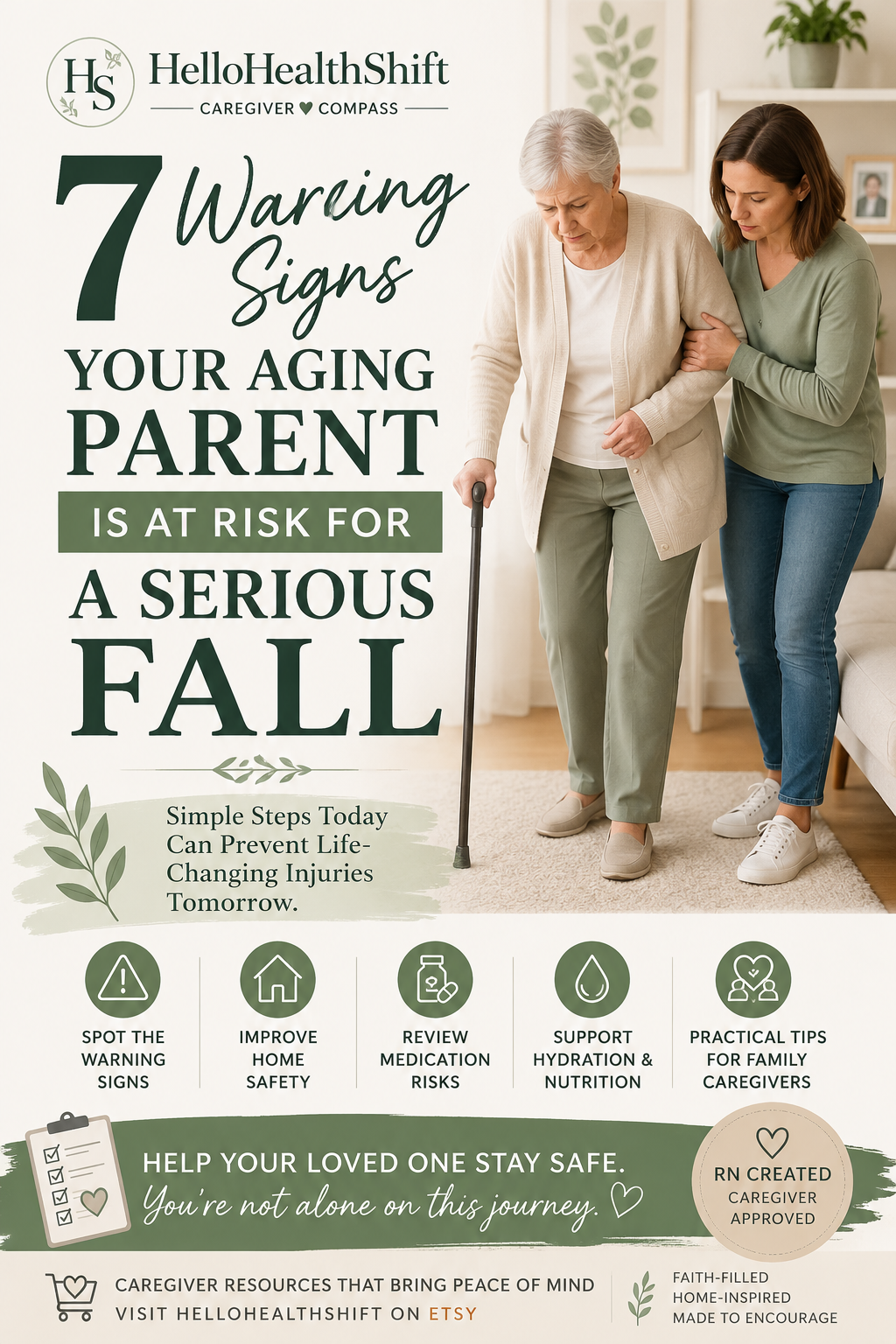

What To Do When an Aging Parent Starts Falling More Often
7 Warning Signs Families Should Never Ignore
By HelloHealthShift | Caregiver Compass
A single fall can change everything for an older adult.
Understanding the aging parent fall risk is crucial for families to take proactive measures.Every year, millions of seniors experience falls that lead to emergency room visits, hospital stays, rehabilitation, loss of independence, and in some cases, permanent nursing home placement.
The aging parent fall risk can be mitigated with proper awareness and safety measures.As a Registered Nurse and long-term care professional, I've seen many families say the same thing:
"We didn't realize how serious the falls were becoming."
The truth is that falls rarely happen "out of nowhere."
Most seniors show warning signs weeks or even months before a serious fall occurs.
Here are seven signs that may indicate your loved one is at increased risk.
Recognizing the aging parent fall risk can help families respond effectively and swiftly.1. They're Holding Onto Furniture While Walking
If Mom or Dad is reaching for walls, countertops, tables, or furniture to steady themselves, this is often one of the earliest signs of declining balance.
Many older adults won't admit they feel unsteady.
Instead, they compensate by "furniture surfing."
What to watch for:
- Holding onto walls
- Using countertops for support
- Walking slowly with a wide stance
- Hesitation when turning
2. They Have Started Falling "Just a Little"
Many families dismiss minor falls because there was no injury.
A fall without injury is still a fall.
Every fall increases the aging parent fall risk, making awareness essential.In fact, prior falls are one of the strongest predictors of future falls.
Pay attention if your loved one says:
- "I slipped but caught myself."
- "I just lost my balance."
- "I tripped over nothing."
- "I slid out of my chair."
These incidents matter.
3. They Are Taking More Medications
Many common medications can increase fall risk, including:
Consulting a doctor can help assess the aging parent fall risk related to medication.- Blood pressure medications
- Sleep aids
- Anxiety medications
- Pain medications
- Certain antidepressants
A medication review with a healthcare provider can often identify opportunities to reduce risk.
4. They Struggle to Get Up From a Chair
Difficulty standing from a seated position may indicate weakness in the legs and core muscles.
Evaluating the aging parent fall risk is important when assessing mobility.Watch for:
- Rocking back and forth before standing
- Using both hands to push off
- Needing assistance from furniture
- Complaints of weakness
Muscle loss can happen gradually and often goes unnoticed.
5. They're Not Eating or Drinking Enough
Dehydration and poor nutrition can contribute to:
Nutrition plays a vital role in managing the aging parent fall risk.- Dizziness
- Weakness
- Confusion
- Low blood pressure
- Increased fall risk
Many seniors simply do not drink enough water throughout the day.
6. Their Home Has Hidden Hazards
Even healthy seniors can fall when their environment is unsafe.
Identifying hazards can reduce the aging parent fall risk significantly.Common hazards include:
- Throw rugs
- Poor lighting
- Cluttered walkways
- Electrical cords
- Uneven flooring
- Lack of grab bars
A simple home safety review can dramatically reduce risk.
7. They Seem More Confused Than Usual
Changes in cognition can increase fall risk.
Cognitive changes can elevate the aging parent fall risk, requiring immediate attention.Confusion may cause seniors to:
- Forget to use walkers
- Misjudge distances
- Rush to the bathroom
- Make unsafe decisions
If confusion appears suddenly, contact a healthcare provider promptly.
Understanding Aging Parent Fall Risk
Understanding the aging parent fall risk helps prepare families for potential issues.What Families Should Do Next
If your loved one has experienced one or more of these warning signs, don't wait until a serious injury occurs.
Start with:
✓ Reviewing medications
✓ Scheduling a medical evaluation
✓ Assessing the home environment
✓ Encouraging hydration and nutrition
✓ Discussing mobility concerns openly
Small changes today can prevent major problems tomorrow.
Taking steps to address the aging parent fall risk can ensure safety and health.Free Caregiver Tip
The most successful caregivers are proactive rather than reactive.
Being proactive about the aging parent fall risk can lead to better outcomes for everyone.Having the right tools, checklists, and planning resources available before a crisis occurs can make caregiving significantly less stressful.
Explore RN-Created Caregiver Resources
If you're caring for an aging parent, spouse, or loved one, visit the HelloHealthShift Etsy shop for caregiver resources including:
- Fall Prevention Checklists
- Dementia Care Guides
- Caregiver Emergency Planning Tools
- Senior Wellness Resources
- Family Caregiver Printables
Browse the full collection here: HelloHealthShift on Etsy