

Dementia Behaviors Explained: Understanding Agitation, Wandering, Repetitive Questions, and Sundowning
Caring for a loved one with dementia can feel overwhelming. One moment everything seems calm, and the next you're managing agitation, repetitive questions, wandering, or increased confusion.
If you've ever wondered why these behaviors happen and what you can do to respond effectively, you're not alone.
The good news is that many dementia-related behaviors are forms of communication. Understanding the "why" behind the behavior can help caregivers reduce stress, improve communication, and create a calmer caregiving environment.
Why Do Dementia Behaviors Happen?
As dementia progresses, changes in the brain affect memory, communication, judgment, reasoning, and emotional regulation.
Because of these changes, individuals living with dementia may struggle to express their needs clearly. Instead, those needs often appear as behaviors.
Common causes of dementia-related behaviors include:
-
Confusion
-
Fear
-
Anxiety
-
Pain or discomfort
-
Fatigue
-
Hunger or dehydration
-
Overstimulation
-
Loneliness
-
Changes in routine
Instead of asking:
"How do I stop this behavior?"
Try asking:
"What is my loved one trying to communicate?"
This simple shift can transform your caregiving approach.
Understanding Common Dementia Behaviors
Agitation and Aggression
Agitation may appear as pacing, yelling, irritability, resistance to care, or verbal outbursts.
Often, these behaviors are signs of distress rather than intentional aggression.
Common triggers include:
-
Physical discomfort
-
Fatigue
-
Feeling rushed
-
Loud environments
-
Fear and confusion
Responding with reassurance, validation, and calm communication can often help de-escalate the situation.
Repetitive Questions
Repeated questions are usually caused by memory loss and anxiety.
Your loved one may not remember receiving an answer, or they may be seeking emotional reassurance.
Instead of becoming frustrated, try responding calmly and redirecting attention toward a meaningful activity.
Wandering
Wandering can be one of the most stressful dementia-related behaviors for caregivers.
Individuals may wander because they are:
-
Looking for someone familiar
-
Searching for home
-
Following old routines
-
Feeling restless
-
Trying to meet an unmet need
Understanding patterns and triggers is essential for improving safety and reducing caregiver stress.
Sundowning
Sundowning refers to increased confusion, anxiety, agitation, and restlessness later in the day.
Many caregivers notice symptoms worsening during the late afternoon and evening hours.
Maintaining a predictable routine, reducing evening stimulation, and creating a calming environment can help minimize symptoms.
Communication Matters More Than Correction
Many caregivers naturally try to correct misunderstandings.
However, with dementia, correction often increases distress.
Techniques such as:
-
Validation Therapy
-
Gentle Redirection
-
Calm Reassurance
-
Simplified Communication
can improve interactions while preserving dignity and reducing frustration.
The goal isn't to win an argument.
The goal is connection.
A Practical Resource for Dementia Caregivers
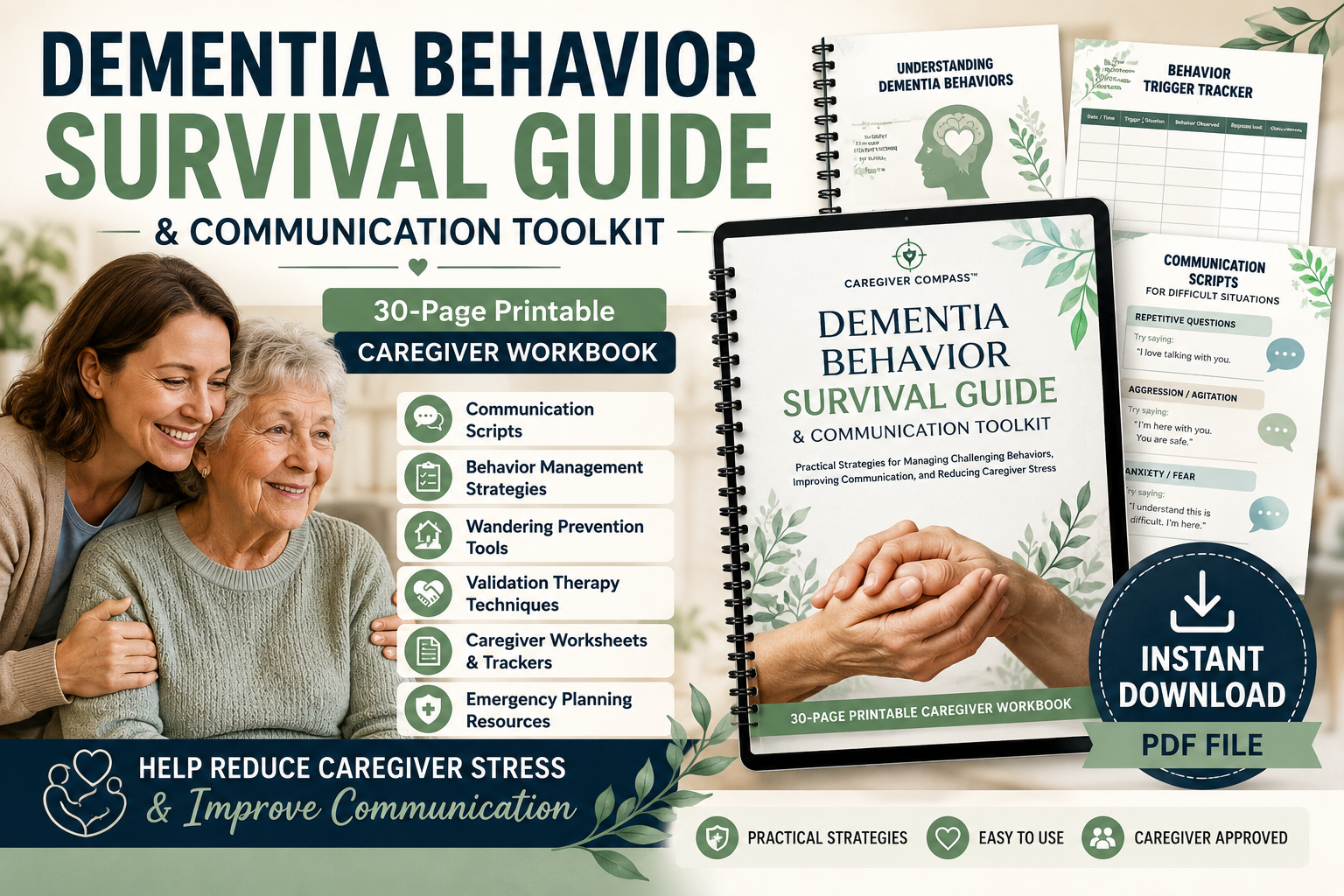
To help caregivers navigate these challenges, we've created the Dementia Behavior Survival Guide & Communication Toolkit.
This printable workbook includes:
✔ Communication Scripts
✔ Behavior Management Strategies
✔ Wandering Prevention Tools
✔ Validation Therapy Techniques
✔ Behavior Trackers & Worksheets
✔ Caregiver Stress Assessment Tools
✔ Emergency Planning Resources
✔ Practical Caregiver Worksheets
Whether you're caring for a parent, spouse, family member, or friend, this workbook provides practical tools you can begin using immediately.
Get your copy here:
Dementia Survival Guide and Toolkit
Final Thoughts
Dementia caregiving is one of the most challenging journeys many families will face.
Remember that difficult behaviors are often symptoms of brain changes—not intentional actions.
By understanding the reasons behind behaviors and using compassionate communication strategies, caregivers can reduce stress, strengthen relationships, and provide more effective support.
Every moment of patience, understanding, and connection matters.
Follow Caregiver Compass